AI Marketing in 2026: What It Actually Means for Growth Teams
Updated August 2026
AI marketing is the use of artificial intelligence to generate, optimize, or orchestrate a marketing program — not just running old campaigns through a chatbot. In practice it splits into three distinct layers: AI-generated creative, AI-optimized media buying, and AI-orchestrated campaign management. Most brands claiming an AI marketing strategy in 2026 are only using the first one.
The 3 Layers of AI Marketing
Every AI marketing tool or vendor pitch fits into one of three layers. Knowing which layer you’re actually buying is the fastest way to tell a real capability from a rebranded feature.
Layer | What It Does | Where Most Brands Are in 2026 |
|---|---|---|
AI-Generated Creative | Image, video, and copy generation for ads and content | Widely adopted |
AI-Optimized Media Buying | Algorithmic bidding, budget pacing, and audience targeting inside ad platforms | Mostly platform-default, underused strategically |
AI-Orchestrated Campaigns | Agentic systems that plan, test, and reallocate budget across channels with limited human input | Early — mostly pilots |
The confusion starts because layer one is the most visible. A brand generates a few ad variations with an image model and calls it an AI-first strategy, while its media buying still runs on manual bid adjustments and its campaign structure hasn’t changed in three years. Generating creative with AI is a tactic. Building a system across all three layers is a strategy.
Why This Matters Right Now
The urgency isn’t hypothetical. Discovery is moving away from the channels most media plans are still built around.
Zero-click searches on Google grew from 56% to 69% in a single year following the rollout of AI Overviews¹ — meaning a fast-growing share of queries never produce a website visit at all.
When an AI Overview appears above the organic results, the top organic listing’s click-through rate drops by 34.5%².
35% of US consumers now start product discovery with an AI tool, compared to just 13.6% who still start with traditional search³.
Put together, these numbers describe a funnel that compresses before a brand’s own channels ever see the user. A media plan built purely around search and social impressions is undercounting where discovery is actually happening.
→ Book a Consultation to Audit Your AI Marketing Readiness
What AI Marketing Is Not
AI-washing is the practice of relabeling an existing tactic as AI-powered without changing what it actually does — a template generator marketed as a creative strategist, or a single AI-assisted ad set presented as an AI marketing program. The tell is simple: if removing the word AI from the pitch doesn’t change what’s being delivered, it wasn’t AI marketing to begin with.
How to Actually Start
The fastest way to move past layer one is to audit where your team already sits across all three layers, then commit budget to exactly one upgrade next quarter — not a full rebuild.
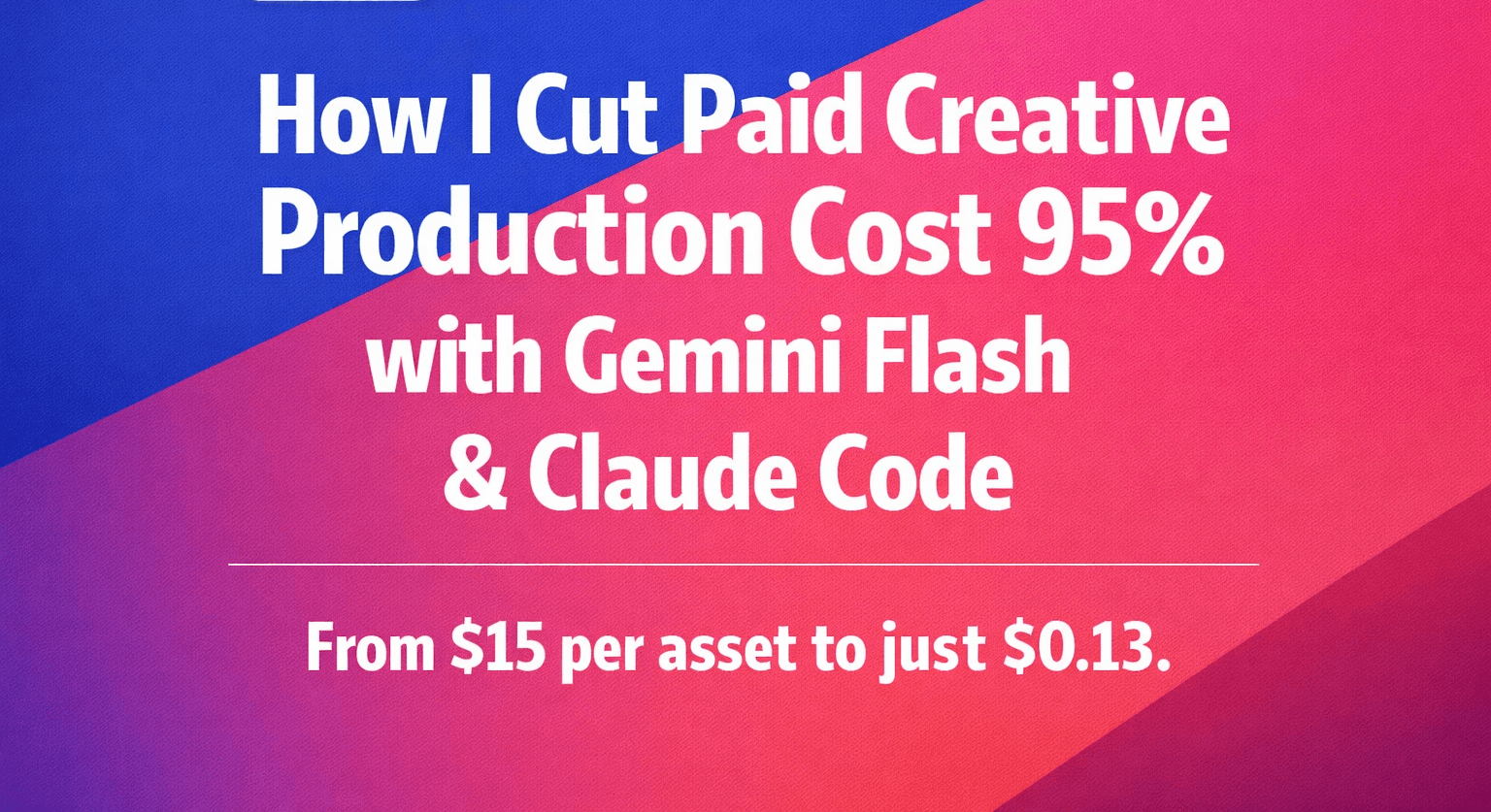
I’ve run this audit inside an AI-first creative system that cut per-asset production cost 95%, from $15 to $0.13, while increasing testing velocity 10x⁴. The unlock wasn’t the image generator — it was tying every generated asset back to a testing framework with a real hit-rate target, the same math that layers two and three depend on.
→ Book a Consultation to Build Your AI Marketing Roadmap
Whatever layer you start with, tie it to a metric that already matters to the business — CAC, LTV:CAC, or testing velocity — not we now use AI. That’s the difference between a capability and a headline.
Frequently Asked Questions
Is AI marketing the same as marketing automation?
No. Marketing automation executes pre-set rules — send this email when that trigger fires. AI marketing includes generative and adaptive systems that create new outputs or make judgment calls with limited human input, which is a meaningfully different capability.
Do I need to hire an AI marketing agency?
It depends on stage and budget more than capability. As a starting point: most teams under a certain size get more value from a focused layer-one investment than a full agency retainer — the tradeoffs are covered in a dedicated post on this blog.
What’s the fastest layer to start with?
AI-generated creative — it’s the lowest cost and fastest to test. It only becomes valuable, though, when it’s tied to an actual testing framework rather than treated as a novelty.
How do I know if AI marketing is actually working?
The same way you’d judge any other channel investment: CAC, LTV:CAC, and testing velocity before and after. If none of those numbers move, the AI layer isn’t doing its job yet — regardless of how the output looks.
The three-layer framework above is the fastest way to evaluate any AI marketing tool or vendor pitch you’ll see for the rest of 2026: ask which layer it actually operates in, and whether your team has a real plan for the other two.
→ Book a Consultation to Talk Through Your Roadmap
References
1. Similarweb, “Zero-Click Search Report,” July 2025
2. Ahrefs, “AI Overviews CTR Study,” 2025
3. Similarweb, “2026 Generative AI Brand Visibility Index”
4. Internal case study — “How I Cut Paid Creative Production Cost 95% With Gemini Flash and Claude Code,” antoniodimas.com/blog/ai-creative-production